Beneath your personal beliefs, cultural constructs, and things you hold dear, is the human body you were born into, a biologically adaptive organism, hardwired to survive in an unpredictable environment.
This hardwired aspect deals only in real data it gathers from your interaction with your environment, things like body temperature, breathing rate, pulse, metabolic rate, muscular strain, and hormone flow.
Using this data stream your body and brain are always trying to ‘guess’ what may be about to occur, based on the last thing that just did occur. It does this by making adjustments to your physical self in case what had occurred will occur again. It adapts, and over time , evolves.
But it makes the adaptations in a specific manner only, and only in relation to the demand you and the environment placed on it.
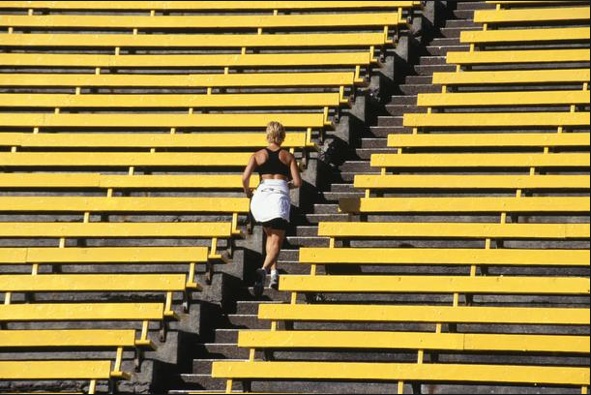
Run up one flight of stairs and your body will respond by elevating your heart rate and increasing your respiration rate, anticipating another flight while recovering from the past one.
Run up 25 flights of stairs, daily, and your body will increase your metabolic rate, shuffle nutrients into the muscles involved in the effort, increase the pumping volume of the left ventricle of your heart, and produce more endorphins, a group of hormones that interact with the opiate receptors in your brain to reduce your perception of pain and stress.
Your body will not adapt by increasing the size of your stomach, sharpen your eyesight, strengthen your shoulder muscles, or develop calluses on your hands. It only makes specific adaptations to the specific inputs you cause or allow.
You body is doing this all the time, awake and asleep, at work, at play, and especially at rest. It is one of the fundamental physical processes that is always occurring inside you, without your permission or control.
Our bodies have been created by evolution at an analog pace, by environmental factors that ebbed and flowed on our planet slowly through years, through eons. Consequently, our species has a nervous system specifically developed from interaction with our planet’s history, one that has helped us flee from predators, hunt as predators ourselves, and deliver bursts of energy during times of stress.
This energy producing aspect of our nervous system has been wired alongside a quieter part, one that functions as the conductor of our body’s processes during periods of rest, digest, and recovery from stress. Both sides evolved together as a whole, complementarily interacting with a slowly evolving world, seeking and maintaining balance behind the curtain of our day-to-day activities.
As a species we now find ourselves here, in our modern, no-longer-analog world, where the rest periods that used to be set by the years and seasons, and re-enforced by constraints of time, distance and traditions, are now shortened, the pauses devalued and almost entirely submerged under a tidal wave of cultural ‘multi-tasking’.
As our outside world has digitalized, it has moved beyond the old boundaries that were set by work hours, home life, landline telephones, and time zones. Things used to take ‘more time’…think of a relationship by snail mail, when one would receive a letter, compose a reply, send a return letter, and wait. In this process there was a whole lot of space and time, thinking time, feeling time, time alone in the middle of your life.
Modern technology has changed all that, has compressed the time, shrunk the space, and the quickened the tempo by which most people live their lives. Any debate about whether the change is for better or worse must respect the main point, that the world has moved on, and there is no going back.
It is a stimulating time to be alive, and quite possibly for our nervous systems, over stimulating. The physical wait times that still exist in our more populated world, time spent in traffic, or lines of people, can now be used as an opportunity to connect to the flow of information that is delivered directly to your psyche through your own personal communications device.
The ‘down’ time that used to be composed of sitting, sleeping, breathing, and just resting, disconnected from external stressors, is gone, and with it that old way of ‘naturally’ regulating our nervous systems. Gone, but in a physical sense, not forgotten.
Feeling states within your body affect the way you breath, and the way you breath can immediately affect the way you feel, creating a closed loop of stress causing stressed breathing, which creates more stress, until you are inordinately, and most completely, stressed.
Since you are always re-programming your brain and body through the actions you choose to repeat, as described in the post shown here: The Prime Enabler, then something that is repeated as often as your breathing has the potential to create not only an immediate effect, but also a long-term ‘state of mind’.
Martial artists, actors, singers, spies, and people who find themselves in high stress situations are taught a simple breathing technique to help them stay calm. It is the identical technique that is used in advanced meditation practice, when calming the body/mind becomes a pre-requisite for development.
The main issue with breath control and other body oriented techniques is that they work at a different pace than the mind oriented speed of normal life in the modern world. The most common mistake people make when approaching techniques and practices that are meant to create physical changes is that they ‘try it a few times, then move on’. Physical practices do not move at the ‘digital’ speed we have become accustomed to in our modern world.
They move more at the speed of the sun, moon, and seasons, continuous and unhurried.
Our human species also used to move at this speed, and our bodies developed their present forms and abilities in relation to that rhythm.To the modern human this calls for unusual patience, like waiting for an Internet connection on Dial-up. The important point being, you ‘get’ the physical changes at a speed that feels very slow, more like the changing of the tides than the turning on of a light.
Sit on the edge of a chair so that your spine is straight; place one hand on your chest and the other on your abdomen. When you take a deep breath in, the hand on your abdomen should rise higher than the one on your chest. This insures that the diaphragm is pulling air into the base of the lungs.
1. After exhaling through the nose, take a slow deep breath in through your nose for a count of 3 (or as long as you are able, not exceeding 3)
2. Slowly exhale through your nose for a count of 5. As all the air is released with relaxation, gently contract your abdominal muscles to completely push the remaining air from the lungs. It is important to remember that you deepen respiration not by inhaling more air but by completely exhaling it.
3. Repeat the cycle eight more times for a total of 9 deep breaths.
In general, exhalation should be longer than the inhalation. The use of the hands on the chest and abdomen are only needed to help you train your breathing. Once you feel comfortable with your ability to breathe into the abdomen, they are no longer needed.
Here is a video showing the technique, in this case the person demonstrating is sitting on the floor, we recommend sitting on the edge of a chair.
There are a million videos out there showing variations on this technique, most of them containing psycho-spiritual mumbo-jumbo and overly complicated instruction. The rule here is: Keep it Simple. Impose a simple demand on your body without a lot of mental links and it will make a simple, and in this case, an extremely worthwhile adaptation.
Once you have the basics to abdominal breathing to such a degree that you don’t have to use your hands on your torso for guidance, but can just feel whether you belly is moving in concert with your breath, it is time to ‘use it’ for effect in your life.
The next time you are in a stressful, frustrating, or boring situation, take a moment to focus your attention to your breathing. Chances are you will be ‘chest breathing’. Change your breathing to abdominal breathing by focusing on it for a minute or so. The change in your breathing will have a calming and centering effect on your body, and consequently, your emotions. This may sound too simple for belief, but this lowering of the breath from the upper chest to the lower abdomen is the primary technique for almost all ‘personal development’ methods. With a little practice, when it becomes your normal method of breathing, you will have a tool that is unused by most of the adult world.
A classic idea in meditative and martial art traditions is the concept of ‘centeredness’. To be in one’s center can be thought as a pulling away from external distractions that keep one’s attention on the world of other people, events, requirements, and desires for control, approval, and acquisition.
The center is a state of being ‘at home’ inside one’s own internal world, not easily shaken, pushed, or pulled by the outside world’s activities.
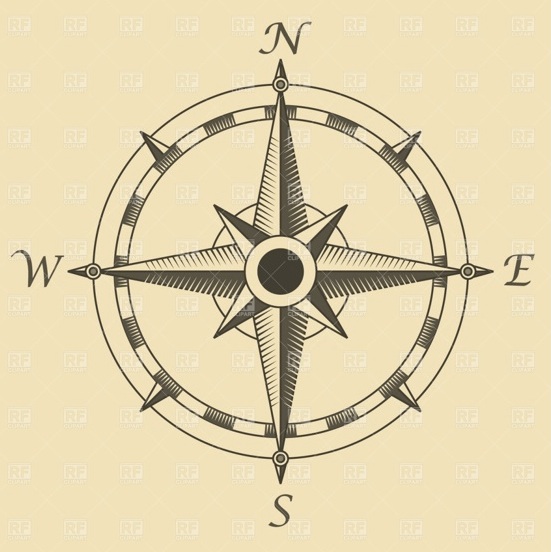
Time at your center is like checking the compass on a sailboat in the middle of the ocean; it allows a reset of direction, and a course correction if needed. And of course, it is simpler to do if you are still.
As it turns out, centeredness is much harder to achieve than describe in words.
Donald Hebb coined the phrase, ‘neurons that fire together, wire together’. Any patterns of behavior that you perform frequently will, over time, become automatic. The more you perform these activities, the more your brain will run through the motions, firing the neurons for the movement, thought, and attention as rapidly and as quickly as possible. Over time, these activities require little conscious willpower – you are running down a very familiar route. The frequent, automatic movements have become entrenched pathways in your brain.
When you are driving on a busy highway, this is a huge advantage. The movement of your hands on the wheel, eyes scanning the road, feet on the pedals, it is all completely habitual and basically happens, ‘by itself’. You’ve learned to drive, and your brain has made what was once a difficult task, second nature.
Your brain does not judge your behaviors. You perform the patterns of behavior, and the brain works to save energy – it makes regular, repeated behaviors faster, smoother and more durable, whether or not those behaviors are in your best interest. It works just the same in strengthening and facilitating activities and habits that may be detrimental to your health and survival as it does in strengthening ones that are helpful. If you rush from one activity to the next all day without giving yourself time for pauses, your brain will adapt and you will become used to the day you have created.
So what happens when you are rushing from event to event, texting, multitasking, making lists and answering emails?
You are training your brain to leave out pauses, to disregard signals from your body and to forget about rest. Your brain will help you do that for as long as possible, but the consequences are stress, exhaustion and little energy for other kinds of activities.
“Every thought, emotion, and act leaves a trail of neurological footprints within you’”- Dr Charlotte Tomaino
The field of neuroscience has changed enormously in recent years. The brain, once viewed as static, unchanging and fixed in adulthood, is now understood to be plastic; flexible, adaptable and capable of growth and change.
What does this mean for you?
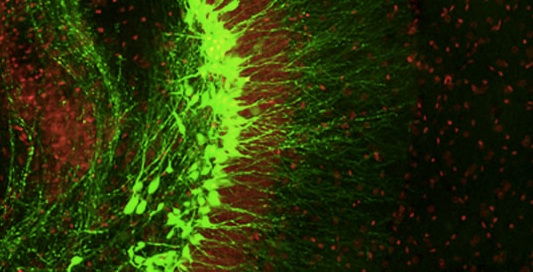
Everything you do during your day plays a role in creating who you are. The cells in the brain, the neurons, respond and change in reaction to what you think, how you feel and what you do.
It is more important to practice frequently than to practice occasionally for a long time
Frequency Adaptation
Imagine you take a short walk through a forest a few times a day. Within a small period of time your repetitive steps will begin to produce a path.
Where was I?
Contrast this with a longer walk, but only once per week. You’d barely leave a trail, and most signs of your steps will vanish within a few days, leaving you to start again anew the following week.
Practice the first steps and practice them frequently. Frequent repetition not only produces a path in the woods, but through a similar process, one establishes a path in the brain.
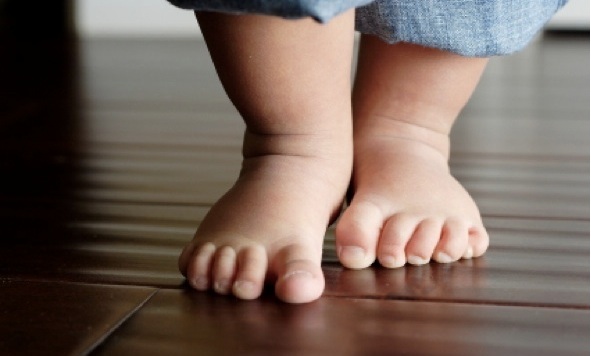
The first step in learning a new skill is to start small. Mastering a skill is the process of learning a series of steps, and the first steps are the foundation, ‘the base on which something is built’. Learn the basics and learn them well. In the same way that you would not expect a baby taking its first steps to prepare for a marathon, do not plan ahead. Do not look forward, but look down. Focus on mastering the first steps and practice them frequently.
Become brilliant at the simple things, and the complex will happen on its own, in its own time.








 Strength and Resilience